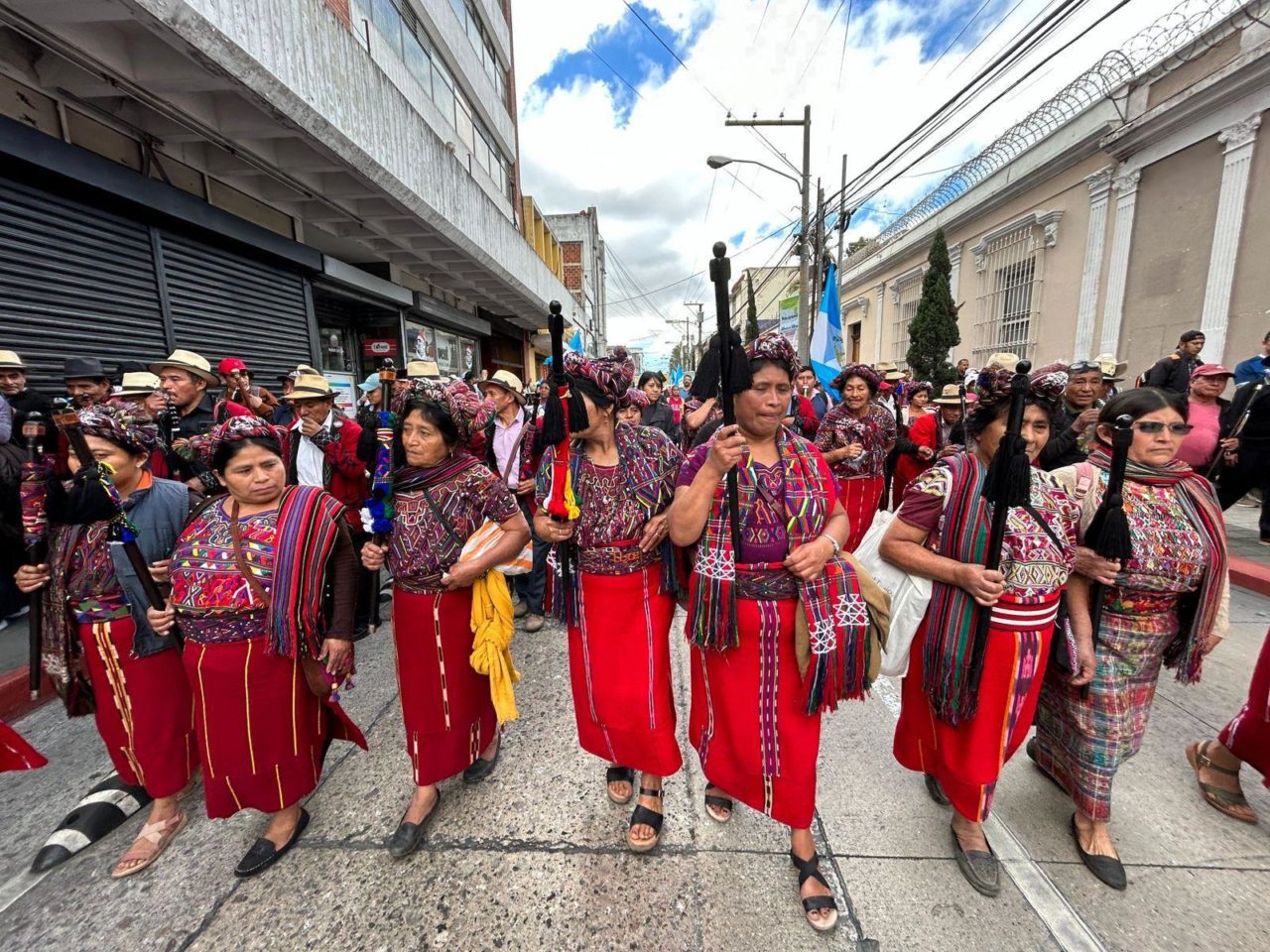
Amid ongoing exclusion and repression, Indigenous communities in Guatemala continue to speak out against the dominant power structures attempting to silence them, and despite intimidation, criminalization, and ongoing legal actions, Indigenous leaders and collectives remain determined as they defend their lands, human rights, and autonomy in a nation where elites have long pushed Indigenous peoples to the margins.
The report highlights how, across various regions of the country, Indigenous communities face political, corporate, and governmental interests aiming to impose extractive projects or suppress their social demands. The resistance led by community leaders, such as the demand to conduct consultations with local populations before implementing mining or hydroelectric projects, has intensified confrontations with authorities and influential economic sectors.
Criminalization of Indigenous Protest
Several reported tactics include the heightened criminal pursuit of Indigenous demonstrations. Community leaders have faced detentions and judicial actions intended to undercut the legitimacy of their claims. Amnesty International and other organizations have observed that the Guatemalan state’s measures infringe on essential rights, such as peaceful assembly and the protection of Indigenous lands.
The case of Bernardo Caal Xol, a leader of the Q’eqchi’ people, stands out in this context. After being convicted in 2018 for his involvement in protests against a massive hydroelectric project on the Cahabón River, his case became a symbol of state persecution against those defending natural resources and Indigenous rights.
A Test for the Political and Economic Order
Although attempts have been made to suppress their cause, these Indigenous movements have consistently contested the nation’s political and economic order. At various moments, they have stalled major initiatives by insisting on compliance with international accords that secure their involvement, including the International Labour Organization’s Convention 169.
These uprisings are not just about the land. They represent a fight for respect for their identity, culture, and the right to decide their future, even in a political climate marked by a notable lack of interest in their demands.
The Indigenous resistance in Guatemala not only defies the elites’ attempts to maintain their dominance but also proves that even under the most challenging conditions, the fight for the dignity and recognition of Indigenous peoples endures.
Source: No Ficción – https://no-ficcion.com/las-voces-indigenas-que-el-poder-de-guatemala-no-logra-callar/